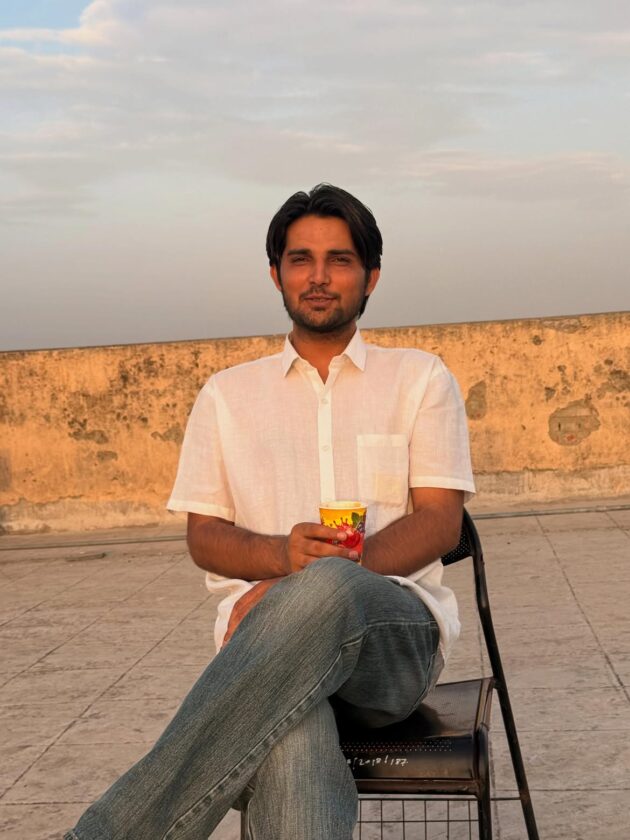
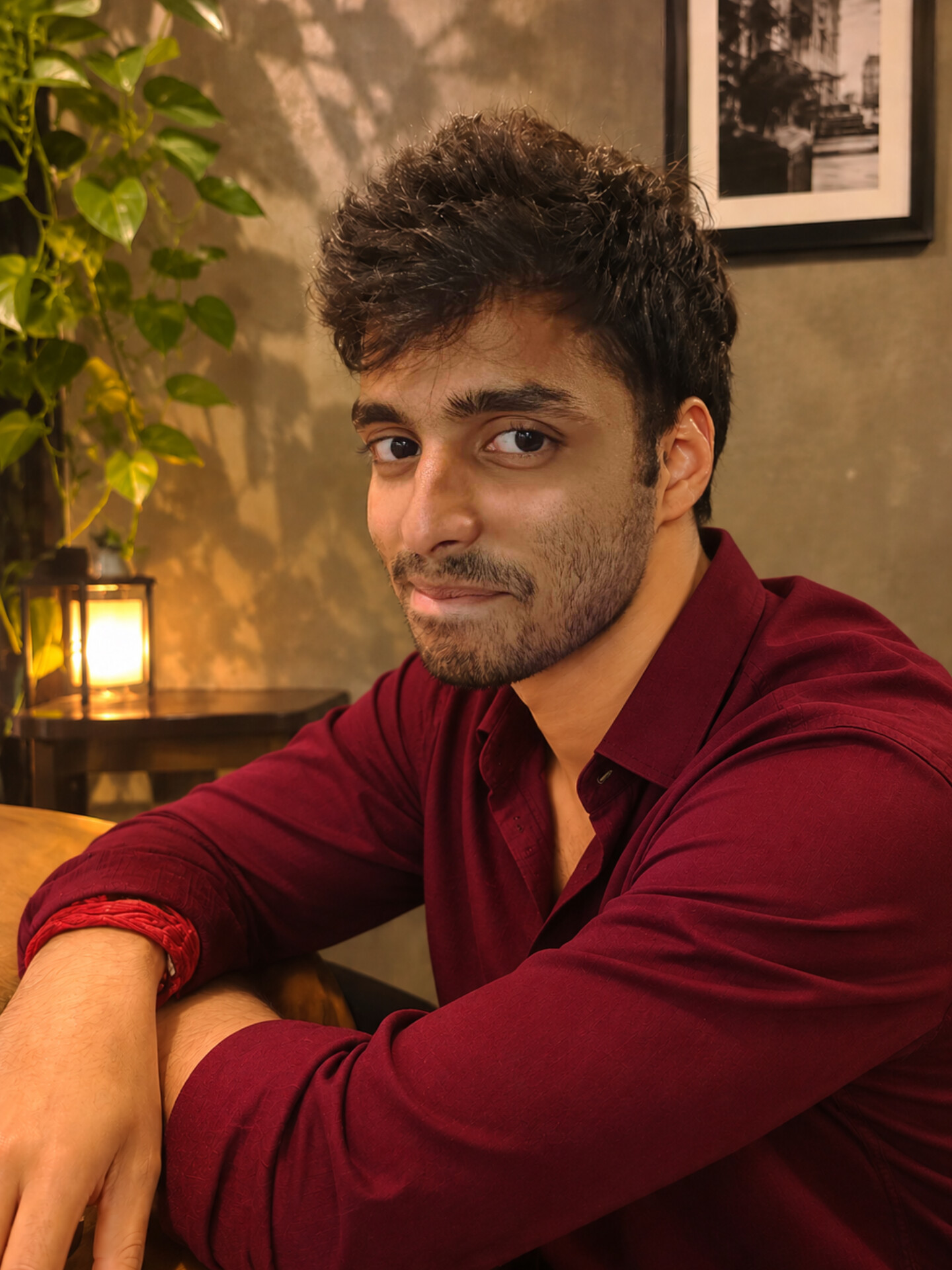
To prepare, he studied the Sadhu’s mindset, body language, posture and way of speaking. “I also worked on his Sanskrit-influenced vocabulary,” he says. “To understand his physicality, I watched a few videos of traditional Sadhus, observing their walking style, gestures and mannerisms.”

“The confrontation with Kabir was particularly challenging,” he says. “My character believes strongly in caste hierarchy, while Kabir questions the very foundation of that belief. Understanding that conflict and portraying it convincingly was challenging.”

The role changed his perspective. “It made me question how often people confuse religion with superiority and traditions with truth,” he says. How much of himself does he see in the Sadhu? “Honestly, very little!”
Theatre, in one word, is “LIFE”. From Kabir: “Never judge a person by their caste, religion or identity. Judge them by their humanity.” Today’s generation should watch, he says, because “even though this play is set in a different time, its questions are still relevant today.” “This play encourages you to think, question and look at society differently.”











 https://www.youtube.com/watch?si=RtToJsBhYBatUrym&v=mOuYNSdhjHA&feature=youtu.be